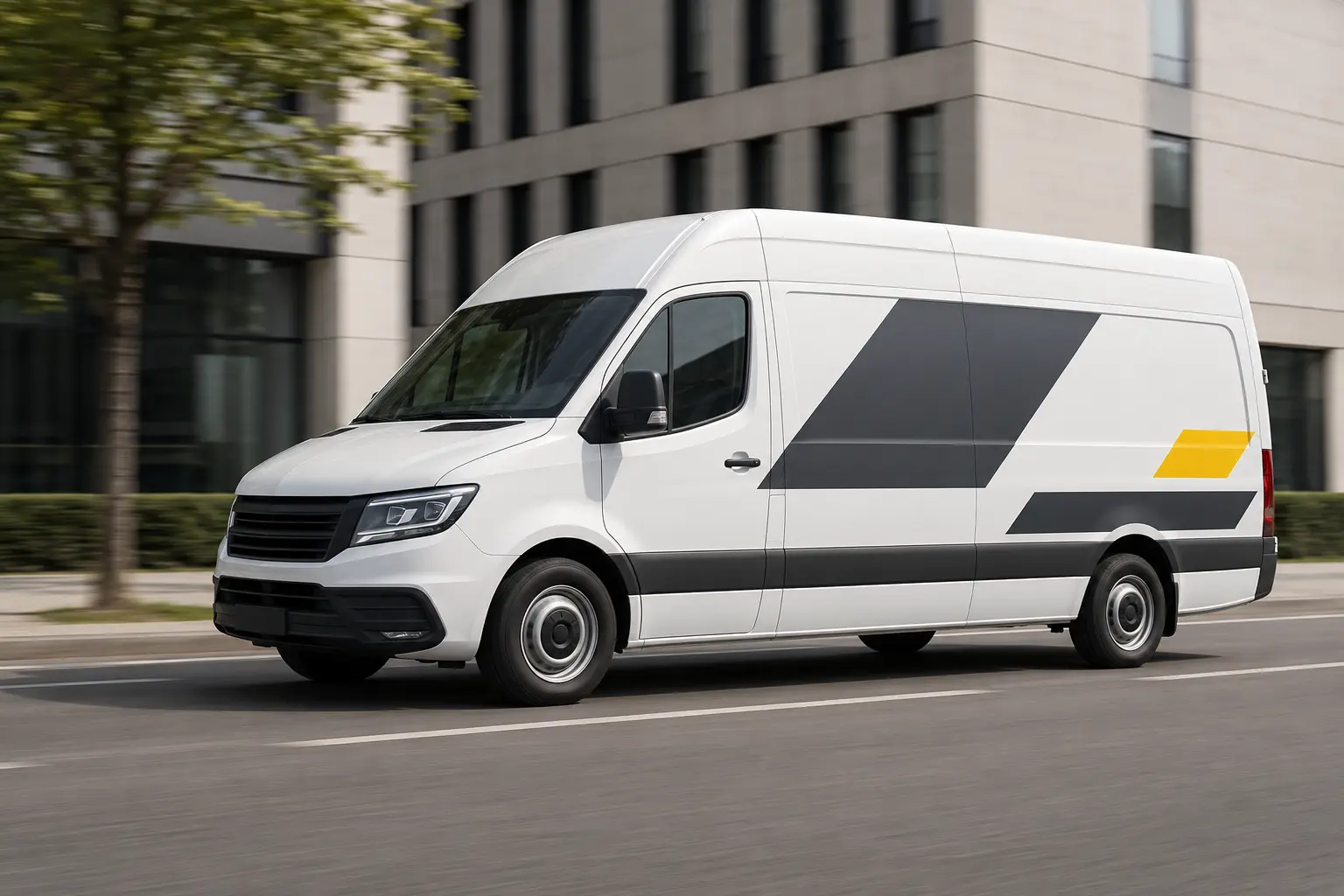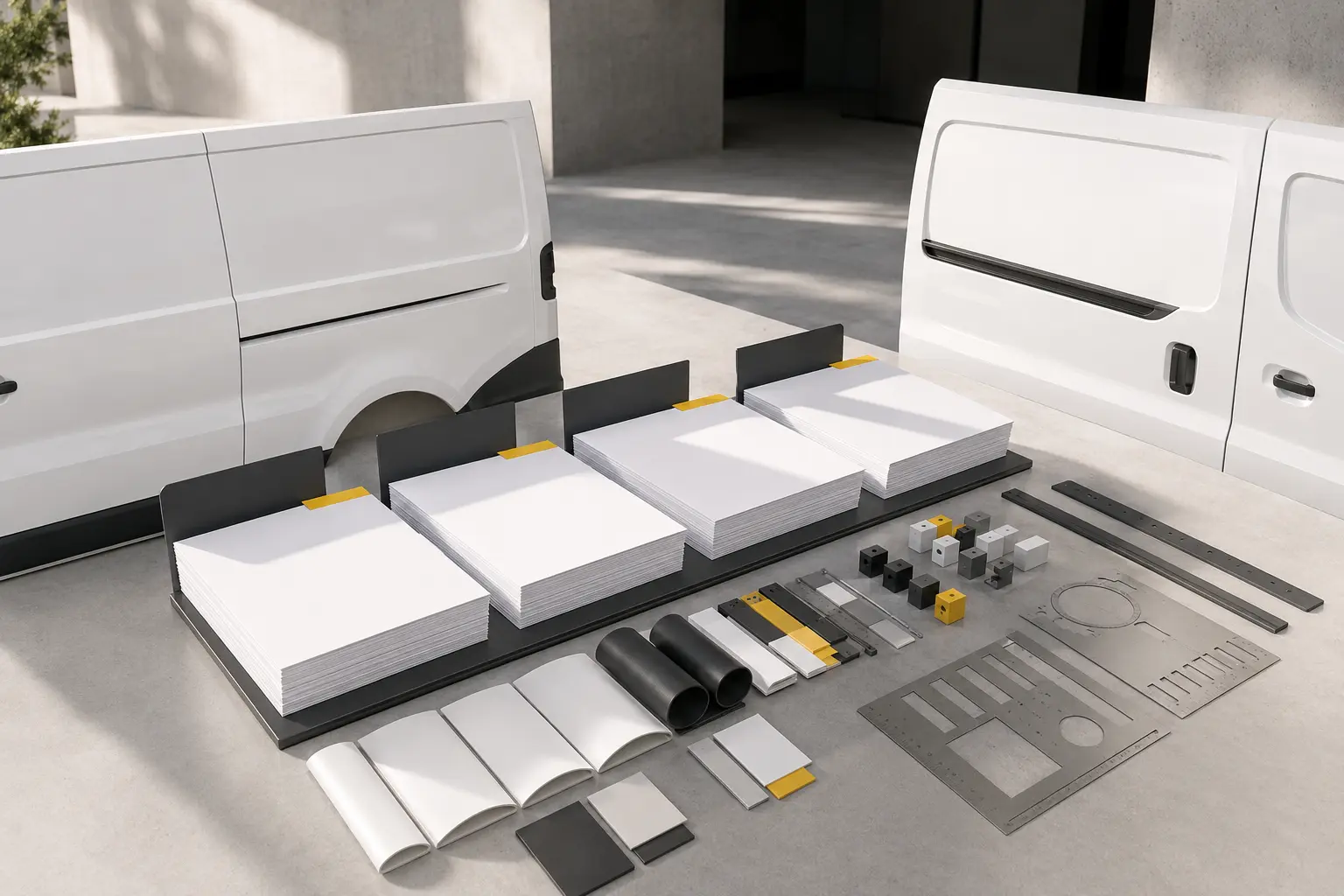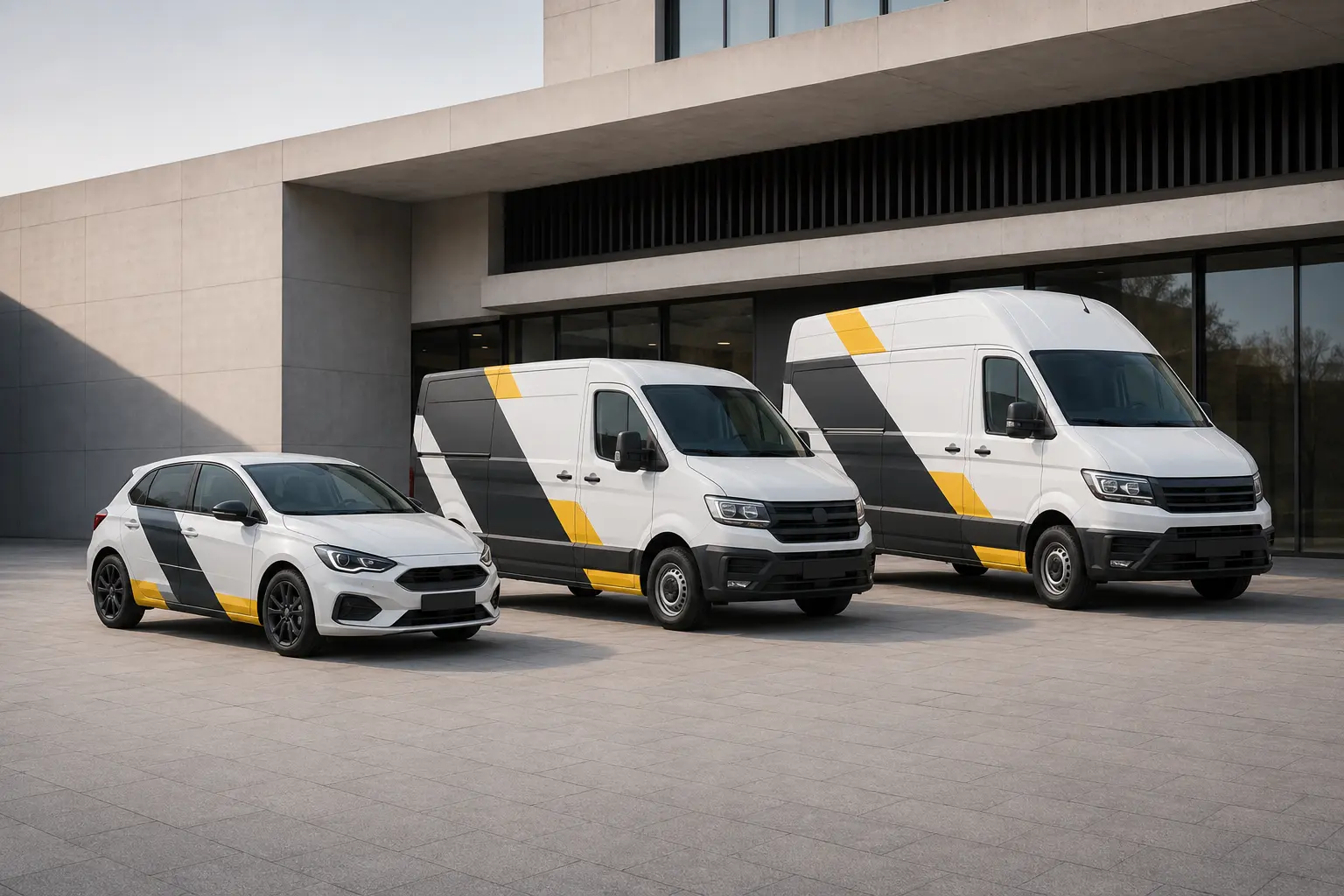
1. Define the system before designing individual vehicles
Fleets often grow gradually. Without shared rules, every new model becomes another isolated solution. Start with non-negotiable brand elements: logo spacing, colour balance, core message, contact route and visual anchors.
Then define flexible areas that may respond to short cars, long vans, glazing and different door configurations.
2. Build master rules and a vehicle matrix
A vehicle matrix records model, variant, location, role, equipment and design level. It reveals which vehicles can share a base treatment and where a dedicated adaptation is necessary.
- Binding logo and colour rules
- Minimum sizes and clear space
- Variants for cars, vans and further types
- Rules for sides, rear and a restrained front
- Unambiguous filenames and version status
3. Prioritise recognition over identical coordinates
Every vehicle should clearly belong to the same brand, but the artwork does not have to sit at the same coordinate. A car and a high-roof van have different proportions. Rhythm, contrast, shape language and information order remain consistent.
This keeps the fleet coherent without forcing important content across doors, wheel arches or recesses.
4. Document rollout and versions
For every production state, record the vehicle, design version, approval date and technical output version. If contact details or services change, the fleet record shows which vehicles need updating.
Pilot vehicles allow both design logic and production choices to be checked before a larger series begins.
5. Plan two quality reviews
Graphic QA checks brand, copy, hierarchy and consistency. Technical QA checks measurement, substrate, material, production and installation. Both belong in the rollout record while remaining assigned to different responsible parties.
A new vehicle model should not receive a simply enlarged old file; it needs a fresh adaptation and technical review.